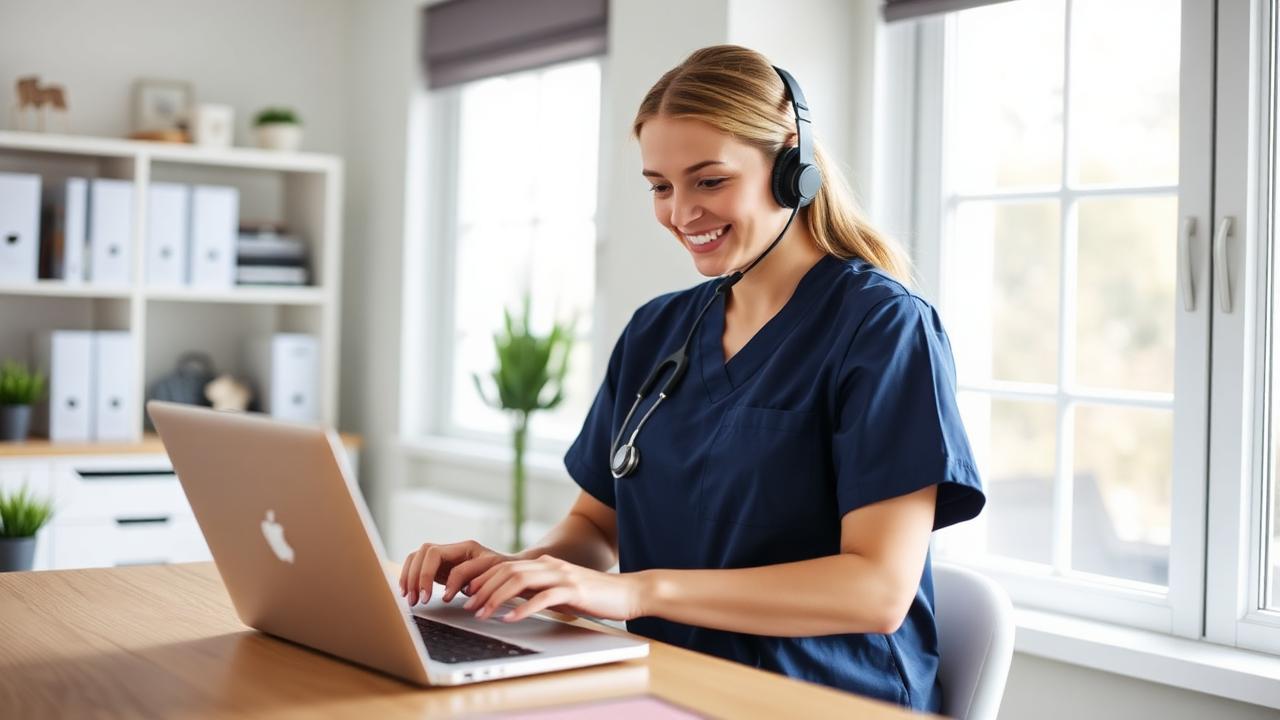
You have spent years on your feet, managing complex patient loads and navigating the high-pressure environment of the hospital floor. Now, you are looking at your laptop and wondering if there is a way to use that hard-earned clinical expertise without the physical toll. You know you have the skills, but when you look at job descriptions for remote roles, you see requirements for 'prior telehealth experience' that you simply don't have yet.
It is a common hurdle, but it is not a dead end. Every remote nurse started their first day at home with zero days of remote experience. The key is translating your bedside expertise into the digital language that recruiters and hiring managers are looking for. You aren't 'just' a nurse; you are a data manager, a patient educator, and a remote triage specialist—even if you've been doing it all in person.
At RemoNurse, we talk to nurses every day who feel stuck in the 'experience gap.' This guide breaks down exactly how to bridge that gap, from pivoting your resume to identifying the specific roles that value clinical depth over remote history.
Understanding the Remote Nursing Landscape
Remote nursing isn't just one job; it is a broad category of roles that happen to be performed outside of a clinical setting. When you are starting with no experience, you need to know which sectors are most welcoming to newcomers.
Insurance companies (Payors) are often the largest employers of remote nurses. They need people to review medical records for accuracy and necessity. Similarly, Telehealth providers need clinicians to perform initial screenings or manage chronic conditions via video or phone.
Utilization Review and Case Management
These roles focus on the 'business' of nursing. Utilization Review (UR) involves looking at patient charts to ensure the care provided matches the insurance coverage guidelines. Case management involves coordinating care for patients with complex needs to prevent hospital readmissions. Both are excellent entry points for bedside nurses because the core skill is clinical judgment.
Telephone Triage and Patient Navigation
If you have worked in the ER or Urgent Care, you have already been doing triage. Moving this to a remote setting just means you are using established protocols (like the Schmitt-Thompson protocols) to advise patients over the phone. Companies like health systems and specialized triage services are frequently open to training nurses who have strong clinical foundations.
Auditing Your Bedside Skills for the Home Office
You might think you lack experience, but your daily shifts are full of 'remote-ready' tasks. The trick is to identify them and bring them to the forefront of your application. You need to prove you can work independently and handle technology without an IT team standing next to your desk.
- Documentation Mastery: If you have used Epic, Cerner, or Meditech, you are already proficient in complex database management. Remote work is 90% documentation.
- Patient Education: Every time you explained a discharge plan or taught a patient how to manage their insulin, you were performing a core function of remote care management.
- Crisis Management: Working remotely means you don't have a code blue team in the next room. Your ability to stay calm and make decisions under pressure is vital when you are the only voice on the line with a patient in distress.
How to Reformat Your Resume for Remote Roles
Recruiters for remote roles spend about six seconds looking at a resume before deciding to move forward. If your resume only lists 'patient care' and 'medication administration,' you might get passed over. You need to use keywords that trigger their interest.
Instead of saying "Provided bedside care for 5 patients per shift," try "Managed complex clinical data and coordinated multidisciplinary care plans for a high-acuity patient population." Instead of "Used EMR for charting," try "Proficient in digital health record management and remote patient data entry."
| Bedside Task | Remote Translation for Resume |
|---|---|
| Charting in Epic/Cerner | Advanced EMR Documentation & Data Integrity |
| Discharge Planning | Transitional Care Coordination & Resource Allocation |
| Patient Triage | Clinical Assessment & Protocol-Based Decision Making |
| Family Updates | Stakeholder Communication & Tele-Consultation |
| Precepting New Nurses | Remote Training & Virtual Peer Mentorship |
The Technical Requirements You Need Now
One of the biggest fears employers have about hiring 'no-experience' remote nurses is technical literacy. You can mitigate this fear by listing your technical environment on your resume or mentioning it in your professional profile.
Ensure you have a reliable high-speed internet connection (minimum 25-50 Mbps download/10 Mbps upload). Mention your familiarity with communication tools like Microsoft Teams, Zoom, or Slack. If you have a dedicated, quiet home office space, mention it. It shows you are ready to hit the ground running without a steep learning curve in basic 'working from home' etiquette.
Where to Find Entry-Level Remote Roles
Don't just search for "remote nurse" on big job boards. You will be competing with thousands of others. Instead, look for specific companies and niche job boards. Many insurance giants like UnitedHealth Group, Anthem, and Humana have dedicated career portals for remote clinical roles.
Check out our job board which often lists roles specifically vetted for flexibility and remote potential. You should also look into "Clinical Research Coordinator" or "Drug Safety Associate" roles with pharmaceutical companies (CROs), which are frequently remote-friendly and value the clinical background of a RN or NP.
The Interview: Proving You Can Work Alone
When you get the interview, the hiring manager will likely ask: "How do you handle working without direct supervision?" They want to know you won't get distracted by your laundry or lose productivity when things get quiet.
Prepare specific examples of times you worked autonomously. Talk about how you manage your time during a busy shift and how you prioritize tasks. Emphasize your self-motivation. Acknowledge the transition: "While I love the bedside, I have found that my strengths lie in clinical analysis and patient advocacy, which are perfectly suited for a remote environment where I can focus deeply on one case at a time."
Comparing Remote Nursing Paths
Not all remote jobs are the same. Some require you to be on camera all day, while others are purely text and data-based.
| Role Type | Patient Interaction | Technical Skill Level | Typical Schedule |
|---|---|---|---|
| Telehealth Nurse | High (Video/Phone) | Moderate | Often 24/7 shifts available |
| Utilization Review | Low (Internal only) | High (Software heavy) | Standard Business Hours |
| Case Manager | Moderate (Phone) | Moderate | M-F, 8am-5pm |
| HIM/Coding | None | Very High | Flexible/Productivity-based |
Frequently asked questions
Do I need to be licensed in the state where the company is located?
Typically, you need a valid nursing license in your state of residence. However, many remote roles require a Multi-State (Compact) License. If your home state is not a compact state, the employer will often pay for you to get licensed in additional states once you are hired. Always check the specific requirements for professionals before applying.
What equipment does a remote nurse need to buy?
Most reputable employers will provide you with a laptop, monitor, and necessary software. You are usually responsible for providing a high-speed internet connection, a quiet workspace, and sometimes a specific type of ergonomic chair or desk. Be wary of companies that ask you to pay for your own equipment upfront through a check—this is a common scam.
Is the pay for remote nursing lower than hospital pay?
It can be, but not always. While you might lose shift differentials (night/weekend pay), you save thousands of dollars a year on commuting, uniforms, and meals. Many remote roles offer competitive salaries that match bedside base rates, especially in specialized fields like Utilization Review or Clinical Trials. You can view our pricing and services to see how we help you negotiate these transitions.
Can I work remotely as a New Grad nurse?
It is significantly harder. Most remote employers look for at least 1-2 years of acute care experience because they need to trust your clinical judgment. If you are a new grad, focus on getting at least 12 months of experience in a specialty like Med-Surg, ER, or ICU first. This will make you a much more attractive candidate for future remote roles.
How do I stay connected to a team while working from home?
Remote companies use tools like Slack, Microsoft Teams, and virtual huddles to keep staff engaged. It requires more effort to build relationships, but many nurses find that the lack of 'unit politics' makes for a much more peaceful work environment. You have to be proactive about reaching out to your manager and peers via chat.
What to do next
Making the jump to remote work doesn't have to be a solo mission. If you are tired of scrolling through endless job posts that all seem to require experience you don't have, let us help. You can learn more about how it works or check out our options for working abroad if you are looking for a global shift. Our team at RemoNurse specializes in finding these 'hidden' opportunities and endorsing qualified nurses directly to employers. Sign up today and let us start applying for you.