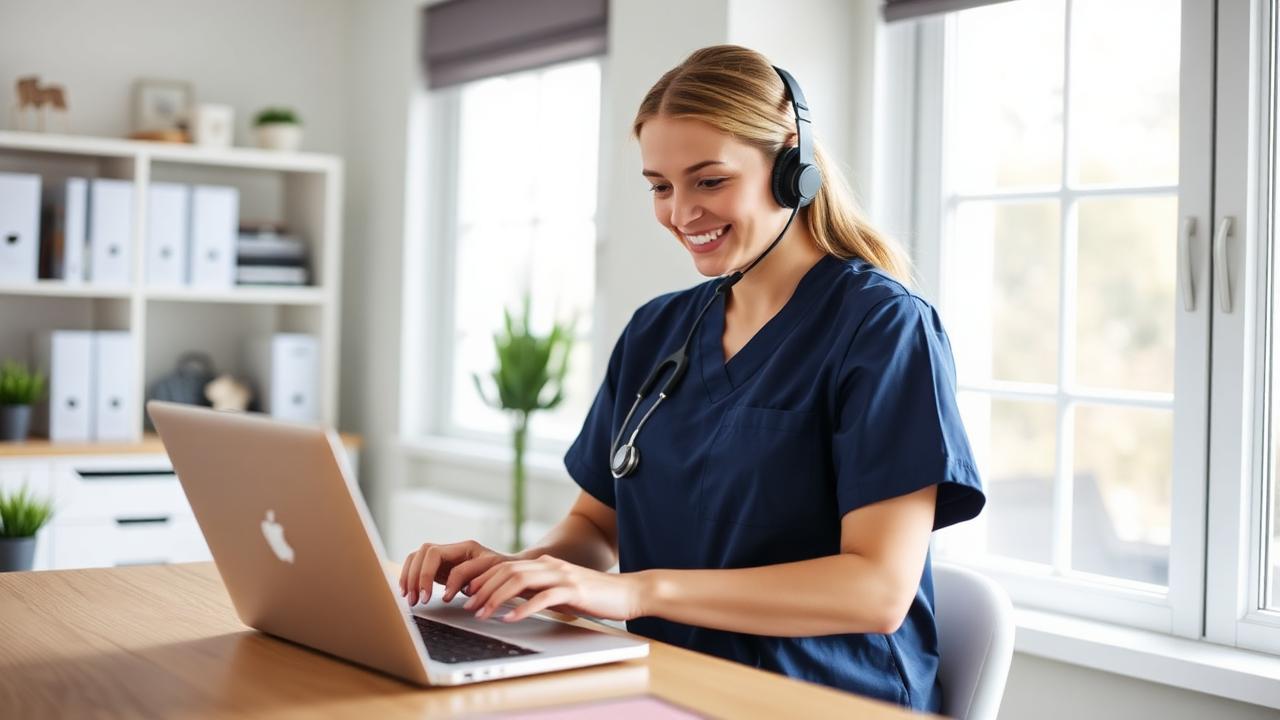
You have spent years on your feet, managing the chaos of the floor, the heavy lifting, and the constant alarms. You know your clinical stuff, but your body is telling you it is time for a change. You want a role that uses your brain more than your back, and you want to do it from your own home office.
Remote case management is one of the most stable paths for nurses looking to transition away from the bedside. It is not an "easy" job—it requires intense organization and a different kind of mental stamina—but it offers the flexibility and physical relief that traditional hospital roles cannot match.
If you are tired of the 12-hour shifts and the commute, this is how you make the pivot into a virtual case management career. We will look at what you actually need to get hired, what you can expect to earn, and how to navigate the competitive application process.
What Remote Case Management Actually Looks Like
When you work as a remote case manager, you act as the bridge between the patient, the healthcare provider, and the insurance company. You are not providing direct hands-on care. Instead, you are ensuring that patients with complex needs—like chronic heart failure, high-risk pregnancies, or recent major surgeries—have everything they need to stay out of the hospital.
Your day typically involves a high volume of phone calls and digital documentation. You might spend your morning reviewing medical records to determine if a specific treatment is "medically necessary" under a patient's insurance plan. In the afternoon, you could be coaching a patient on how to manage their medications or coordinating with a home health agency to ensure equipment is delivered on time.
It is a job of details. You are the navigator. While you aren't emptying catheters, you are often managing high-stress situations where a patient is confused about their care or a claim has been denied. You need a thick skin and excellent communication skills.
Core Requirements for Remote Case Management
Most employers look for a specific profile when hiring for these roles. Because you are working without direct supervision, they need to know you have the clinical judgment to make sound decisions independently.
Clinical Experience
Almost every remote case management job requires at least 2 to 3 years of acute care experience as a Registered Nurse (RN). Employers value backgrounds in ICU, ER, or Medical-Surgical units because these nurses have seen a wide variety of diagnoses and understand the trajectory of patient recovery. If you have experience in home health or hospice, you are also at a major advantage, as these roles already involve a high degree of independent coordination.
Licensing
While you can work from home, you must hold an active RN license. Many remote roles prefer candidates with a multistate (Compact) license. Because you might be calling patients in different states, having a Compact license makes you much more employable. If you don't have one, you may be required to obtain licenses in other states, often reimbursed by the employer.
Technical Proficiency
Since you are working virtually, you must be comfortable with technology. This goes beyond just knowing how to use an EMR. You will need to manage dual monitors, navigate complex insurance software, use VoIP phone systems, and participate in video conferencing. Speed and accuracy in typing are non-negotiable.
Comparing Case Management Roles
Not all remote case management jobs are the same. Depending on who you work for—a hospital system, an insurance company (payer), or a private firm—your daily tasks and stress levels will vary.
| Feature | Utilization Review (UR) | Telephonic Case Management | Workers' Comp Case Management |
|---|---|---|---|
| Primary Goal | Determining medical necessity | Improving health outcomes | Getting the employee back to work |
| Patient Contact | Minimal to None | High (Daily calls) | Moderate (Includes employer contact) |
| Clinical Focus | Insurance guidelines/data | Chronic disease management | Orthopedics/Occupational health |
| Stress Level | High (Production quotas) | Moderate (Emotional labor) | Moderate (Legal/Regulatory focus) |
| Average Salary | $75,000 - $92,000 | $78,000 - $95,000 | $80,000 - $98,000 |
Salary and Compensation Expectations
One of the biggest questions nurses have is whether they will take a pay cut to work from home. The answer is: it depends. If you are currently working at a high-paying hospital in a major city like New York or San Francisco, a remote salary might feel like a step down. However, when you factor in the savings on gas, car maintenance, work wardrobe, and most importantly, your time, the math often works in your favor.
Typically, remote RN case managers earn between $75,000 and $95,000 per year. Senior roles or those requiring specialized certifications can reach over $100,000. Many insurance companies also offer performance bonuses, 401k matching, and comprehensive health benefits that rival or exceed what hospitals provide.
For those looking for flexible healthcare jobs, some companies offer part-time or per-diem remote case management, though these are rarer than full-time positions.
The Importance of Certification (CCM vs. ACM)
While you can get hired without a certification, having one is the single best way to boost your salary and get your resume to the top of the pile. Most employers will require you to get certified within 12 to 24 months of hire if you don't already have it.
- CCM (Certified Case Manager): This is the gold standard. It is nationally recognized and highly respected by insurance companies (payers). It shows you understand the business side of healthcare as well as the clinical side.
- ACM (Accredited Case Manager): This is often preferred by hospital-based case management departments. It focuses more on the transition of care within a health system.
If you are aiming for a fully remote role with an insurance giant like UnitedHealth Group, Aetna, or Humana, the CCM is usually the better investment. You can find more details on how to prep for these in our resources section.
How to Break Into the Field with No Experience
If you have only worked bedside, the transition can feel like a "chicken and egg" problem: you need experience to get the job, but you can't get the job without experience. Here is how you bridge that gap.
- Pivot within your current hospital: Ask to shadow the discharge planners or utilization review team. Even six months of internal experience makes you a prime candidate for remote roles.
- Highlight "Case Management" tasks on your resume: Even as a floor nurse, you do case management. Do you coordinate with social workers? Do you educate patients on discharge? Do you call doctors to clarify orders? Use these keywords.
- Get your Compact License: If your state is part of the Nurse Licensure Compact (NLC), ensure your license is updated to multistate status. This immediately expands your job pool to dozens of other states.
- Use a placement service: Finding these roles on massive job boards is difficult because they get thousands of applicants. Working with a human-led service that understands how it works can help you get your resume in front of actual recruiters rather than getting stuck in an automated tracking system.
The Trade-offs: Is It Right for You?
Before you quit your hospital job, you should be honest about the realities of working from home. It is not for everyone.
- Isolation: You will miss the camaraderie of your coworkers. You won't have someone to vent to in the breakroom. Your interactions will be via Slack, email, and phone.
- Production Metrics: Many remote roles are "production-based." This means you may be expected to complete a certain number of reviews or calls per day. It can feel like a treadmill if you aren't organized.
- Sedentary Work: You will be sitting for 8 hours a day. You have to be intentional about moving your body, or you may find yourself with back or neck issues that are different from the ones you had at the bedside.
For many, these trade-offs are well worth the ability to work in pajamas, avoid the snow, and have a predictable schedule that allows for dinner with the family every night.
Frequently asked questions
Do I need a BSN to be a remote case manager?
While some companies will hire ADNs with extensive experience, the vast majority of remote insurance roles now require a BSN. If you have an ADN, your best path is to gain experience in home health or a hospital-based case management role first, or look for overseas healthcare jobs that might have different requirements.
Can I work as a remote case manager from another country?
It is possible, but complicated. Most U.S.-based companies require you to reside in the U.S. for tax and security reasons. However, some international firms hire "Global Case Managers." You must ensure your nursing license is valid and that you have a secure, HIPAA-compliant internet connection. Specialized placement services can help professionals navigate these specific legal hurdles.
What is the difference between UR and Case Management?
Utilization Review (UR) is strictly about the money and the rules—does this treatment meet the criteria for payment? Case Management is more holistic—how can we help this patient get better and stay out of the hospital? UR is often less "people-facing" and more focused on data and clinical guidelines.
How many patients will I manage at once?
Caseloads vary wildly. In a high-intensity clinical role, you might manage 25-40 complex patients. In a lower-intensity telephonic role, you might have a roster of 100+ patients that you check in with monthly. Ask about the "active caseload" and "daily production goals" during your interview to get the real story.
Can I take care of my kids while working a remote nursing job?
Generally, no. Most remote employers require proof of childcare. These roles involve constant phone calls and require your full attention. While you save time on the commute, you are expected to be at your desk and available during your shift hours just like you would be at a hospital.
What to do next
Transitioning to a remote role is a major career milestone that requires a strategy. If you are ready to stop searching through endless job boards and want a team to advocate for you, let us help.
At RemoNurse, we vet the employers and the roles to ensure they are legitimate, high-quality opportunities. We can help you refine your resume, endorse you to hiring managers, and even handle the application process for you. Get started today by exploring our pricing and let our team match you with the remote nursing career you’ve been looking for.